

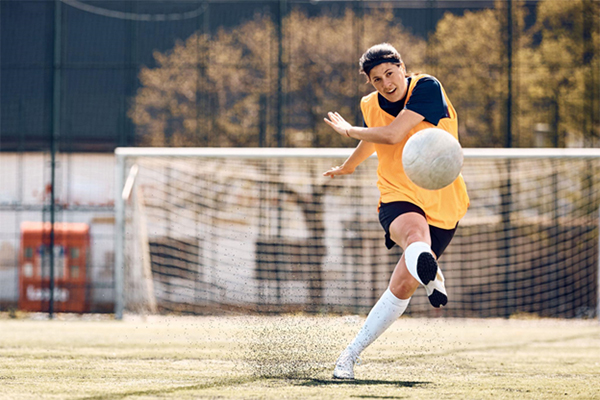
For athletes and active individuals, ACL injuries can be life-changing. They often require surgery that replaces the torn ligament to restore an active lifestyle. But a groundbreaking approach offers a way to restore the ACL rather than reconstruct it. The Bridge-Enhanced ACL Restoration (BEAR) technique represents a major shift in sports medicine. In this post, we’ll explore how BEAR works and why it’s transforming ACL treatment.
Understanding the BEAR Technique: A Revolution in ACL Healing
Traditionally, ACL tears are treated with reconstruction, where the damaged ligament is replaced using a tendon graft. While effective, reconstruction requires the body to adapt to entirely new tissue.
The BEAR technique takes a different path by allowing the native ACL to heal itself. Using a bioengineered collagen scaffold placed between the torn ends of the ligament, BEAR creates an environment that supports natural tissue restoration. With the help of the patient’s own blood, the scaffold stimulates healing while maintaining the ligament’s original anatomy, which is something reconstruction cannot achieve.
Why Preserving the Native ACL Matters
Preserving the natural ACL may offer several advantages, particularly for athletes and patients focused on long-term knee health. Potential benefits include:
- Better preservation of knee proprioception, which is the ligament’s ability to sense motion and position
- Less donor-site morbidity, since no graft harvest is required
- A more natural healing process, aligning with the body’s normal biomechanics
- Optimized stability by maintaining the ligament’s original attachment points
By focusing on biological healing rather than replacement, BEAR aims to restore function in a way that allows patients to return to activity with confidence.
Who May Be a Candidate for the BEAR Technique?
Not every ACL tear qualifies for this approach. The BEAR technique is typically recommended for:
- Younger athletes with complete ACL tears
- Patients seen soon after the injury
- Individuals whose torn ligament ends are still viable
- Those seeking a biologic alternative to graft-based reconstruction
A sports medicine specialist can determine whether the tear pattern, timing, and overall knee stability make BEAR the appropriate option.
Recovery After BEAR: What Patients Can Expect
Rehabilitation following BEAR shares similarities with traditional ACL protocols, but the emphasis is on protecting the healing ligament while gradually restoring strength and mobility. Early motion, quadriceps activation, and sport-specific progression remain essential, guided by a structured program tailored to each patient’s needs.
Because the native tissue is healing, patients may experience improved confidence and a strong sense of connection to their knee as recovery progresses.
If you have experienced an ACL injury, a consultation with Dr. Mithoefer, sports medicine specialist, can help determine whether the BEAR technique or another treatment approach aligns best with your goals for long-term knee health and athletic performance.
AUTHOR: Kai Mithoefer, MD is board-certified in both Orthopedic Surgery and Orthopedic sports medicine specialist. Dr. Mithoefer is an internationally recognized specialist for complex shoulder and knee injuries with over 15 years of experience in the treatment of sports-related injuries. Dr. Mithoefer practices at Boston Bone and Joint Institute and has published more than 100 scientific articles and book chapters, and is a frequent speaker at national and international orthopedic meetings.